
How Responsible Birdwatching Supports Conservation in Colombia — And What to Look For
Conservation is not a slogan — it is a system
Birdwatching is often described as a “low-impact” activity. While this can be true, it is not automatic. The difference between extractive tourism and regenerative conservation lies not in intention, but in design.
In Colombia — one of the most biodiverse countries on Earth, home to over 1,900 bird species — responsible birdwatching can play a meaningful role in conservation. But only when it is structured to support ecosystems, local communities, and long-term stewardship.
Understanding what makes birdwatching genuinely responsible is the first step toward choosing experiences that make a real difference.
When birdwatching helps — and when it harms
Birdwatching can create powerful incentives to protect habitats. It can also increase pressure on sensitive species if poorly managed. The outcome depends on how the experience is designed, not just on the observer’s intentions.
Key variables include:
• Group size and frequency of visits
• Site selection and habitat resilience
• Guide training and ethical standards
• Distribution of economic benefits to local communities
Responsible birdwatching acknowledges these variables explicitly and designs experiences accordingly. The absence of this design thinking is what turns well-meaning tourism into extractive pressure.
Habitat protection through economic value
One of the most effective conservation mechanisms available is making intact ecosystems economically viable without degrading them. In Colombia’s Andean cloud forests, páramos, and Amazonian lowlands, this principle is especially relevant — where land use decisions are made daily, and where the economic case for conservation must compete with alternatives.
Well-designed birdwatching experiences can:
• Generate income tied directly to healthy, intact habitats
• Support private reserves and community-managed conservation lands
• Create economic alternatives to land uses that degrade biodiversity
When livelihoods depend on conservation outcomes, protection becomes a shared interest rather than an external mandate. This is not idealism — it is incentive design.
The role of local guides and ecological knowledge
Local guides are not just facilitators — they are custodians of territory. In Colombia, experienced local bird guides hold detailed ecological knowledge built over years of observation: species behavior, seasonal patterns, micro-habitat preferences, and the subtle signs of ecosystem health or stress.
Responsible birdwatching strengthens this role by:
• Prioritizing fair and transparent compensation
• Supporting continuous field training and scientific literacy
• Valuing accumulated knowledge over speed, novelty, or spectacle
• Building long-term relationships with guides and communities rather than transactional encounters
This investment builds conservation capacity that persists well beyond any individual trip. A well-supported local guide community becomes an informal monitoring network for the ecosystems they work in.

Ethics in the field: small decisions, real consequences
Conservation outcomes in Colombia’s most biodiverse regions are shaped, in part, by everyday decisions made in the field. These decisions may seem minor, but their cumulative effect is significant.
Responsible birdwatching includes:
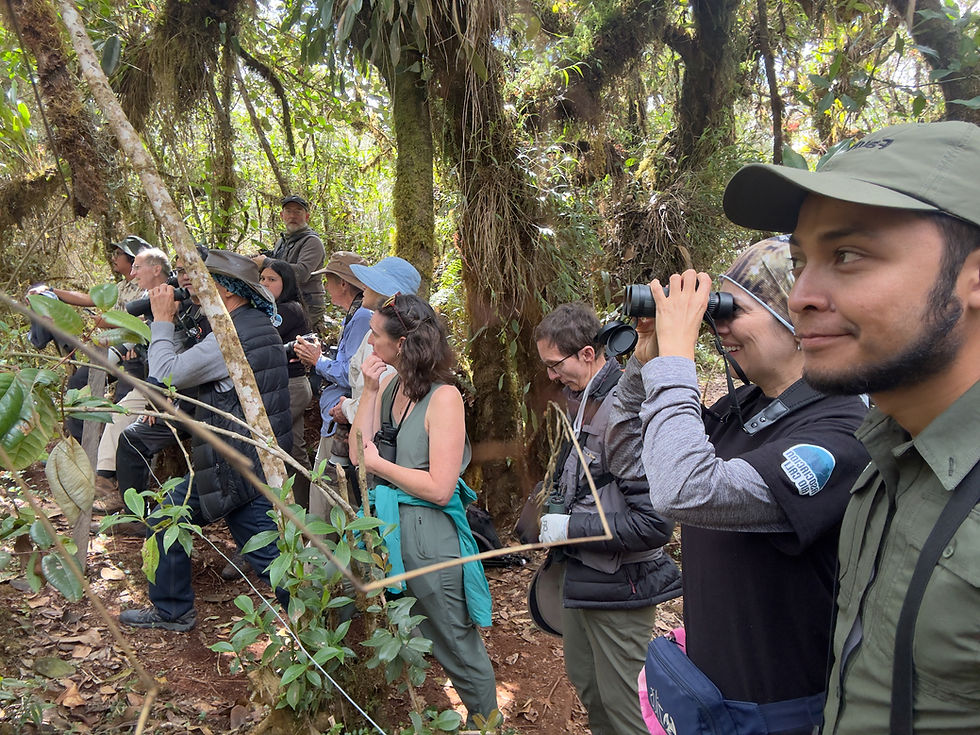
• Limiting group sizes to reduce disturbance
• Reducing or avoiding playback, particularly for sensitive or rare species
• Maintaining respectful distances from nesting sites and foraging areas
• Rotating observation sites to prevent habitat degradation from overuse
These decisions may reduce short-term “success” in terms of species count or photographic opportunity. But they protect the long-term ecological integrity that makes Colombia’s birdwatching exceptional in the first place.
From observation to understanding
Conservation is strengthened when travelers leave with more than photographs — when they leave with understanding.
Educational components transform birdwatching from consumption into participation. Explaining a species’ role in its ecosystem, the pressures it faces, and the conservation efforts underway connects the traveler to something larger than the encounter itself. Travelers who understand what they are observing are significantly more likely to support conservation efforts long after the trip ends — through advocacy, donation, or simply by making more informed choices in the future.
Community involvement beyond employment
True conservation impact goes beyond job creation. Community-based birdwatching initiatives in Colombia can reinforce local pride in biodiversity, support land stewardship traditions that predate modern conservation frameworks, and encourage intergenerational knowledge transfer that keeps ecological awareness alive.
When communities see wildlife as part of their cultural identity — not just a resource or a spectacle — conservation becomes culturally embedded. This is the most durable form of protection available.
The limits of birdwatching as a conservation tool
It is important to be direct about this.
Birdwatching alone will not solve deforestation, climate change, or habitat loss in Colombia. It is one tool among many, and its value lies in complementing scientific research, protected area management, and policy frameworks — not replacing them.
Responsible operators recognize these limits and avoid overstating impact. Conservation claims that cannot be substantiated with specific, measurable outcomes should be treated with skepticism. The most credible operators are those who speak precisely about what they do and do not contribute.
How we approach conservation at Faunaris
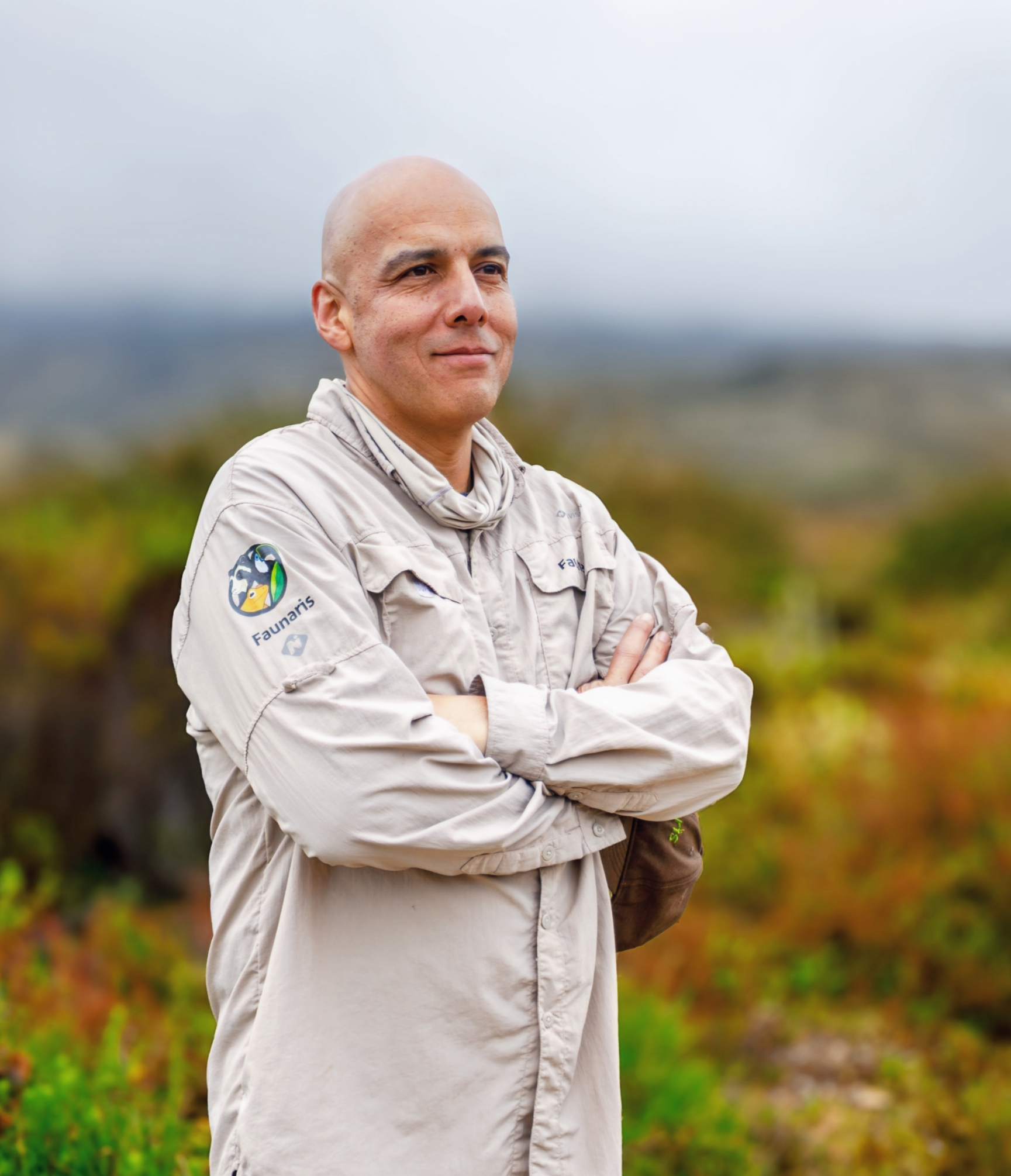
At Faunaris, conservation is not an add-on or a marketing position. It is embedded in how we design every experience — from site selection to guide relationships to the way we frame what participants observe in the field.
Our approach is built on:
• Small groups and site selection based on habitat resilience, not logistical convenience
• Long-term collaboration with local guides and landowners in Colombia’s most biodiverse regions
• Educational framing of every experience — species behavior, ecological context, conservation status
• Honest communication about impact: what we contribute, and where the limits are
We do not claim to save ecosystems. We aim to support the people, practices, and economic conditions that make conservation possible in the places we work.
Choosing experiences that actually contribute
Responsible birdwatching supports conservation when it is intentional, informed, and honest about its own limits. It respects ecological boundaries, invests in local knowledge, and values long-term outcomes over short-term gains.
For travelers seeking experiences in Colombia that contribute positively — without exaggerated claims or performative ethics — the difference lies in how an experience is designed, not how it is described.
If you would like to understand how we think about this in practice, we invite you to learn more about who we are and how we work.
Ready to explore? See our Bio-Escapes and Wildlife Expeditions.
Comments