
Community-Based Birdwatching in Colombia: How Local Stewardship Shapes Conservation
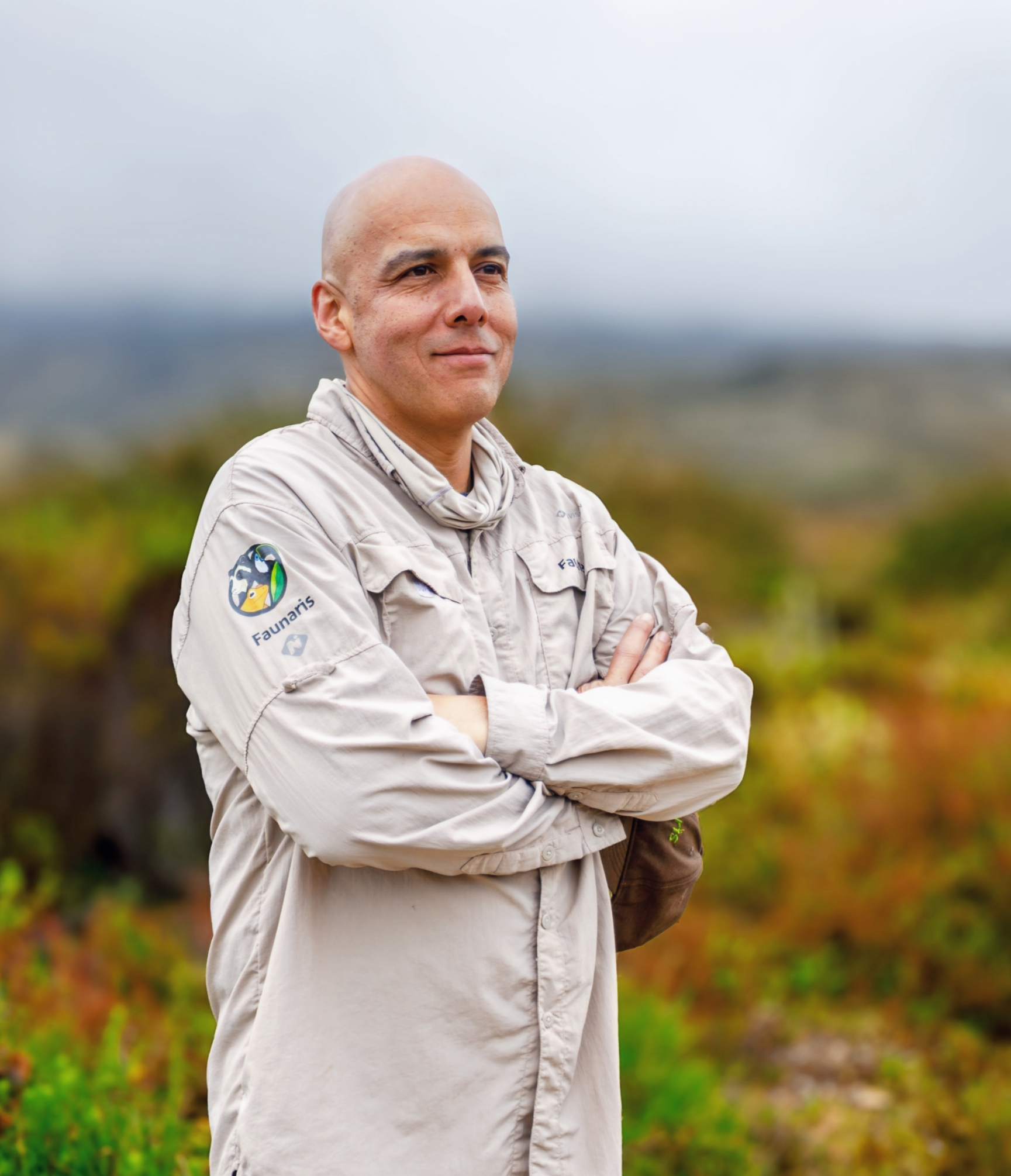
Birdwatching does not happen in empty landscapes
Birdwatching experiences are often described in terms of species, habitats, and ecosystems. Less frequently do we talk about the people who live in those landscapes — even though conservation outcomes are deeply shaped by them.
In Colombia, birdwatching does not occur in untouched wilderness. It takes place in living territories: cloud forests managed by Andean communities, páramos where indigenous peoples have practiced land stewardship for generations, and agricultural landscapes in the Magdalena Valley and Orinoquia where farmers make daily decisions that determine what biodiversity survives.
Understanding this reality is essential to moving beyond tourism and toward long-term conservation impact.
What “community-based” really means
The term community-based tourism is widely used — and frequently misapplied.
Community-based birdwatching is not:
• Folklore or cultural performance for visitors
• Symbolic participation without real agency
• Short-term employment that ends when the tour group leaves
At its core, it means that local communities actively participate in decision-making, retain agency over their territory, and benefit directly and sustainably from conservation-oriented activities.
When designed properly, community-based birdwatching is not an add-on to a nature experience. It is a governance model — one that determines who makes decisions, who captures value, and who bears responsibility for outcomes.
Why communities are essential for conservation in Colombia
Many of Colombia’s most important bird habitats exist outside formally protected areas. The country’s extraordinary avian diversity — over 1,900 species — is distributed across private lands, indigenous territories, communal reserves, and agricultural landscapes that no national park system can fully cover.
In these contexts, conservation depends less on enforcement and more on local stewardship. When a farming family in the Western Andes decides to keep a forest fragment standing rather than converting it to pasture, or when an indigenous community in the Amazon maintains its traditional land-use practices, those decisions have direct conservation consequences.
Birdwatching can support this stewardship by creating economic alternatives tied to intact ecosystems, reinforcing the cultural and economic value of biodiversity within the community, and supporting long-term land-use decisions that favor conservation over extraction.
When communities see tangible, consistent benefits from protecting habitats, conservation becomes a rational economic choice — not an externally imposed constraint.
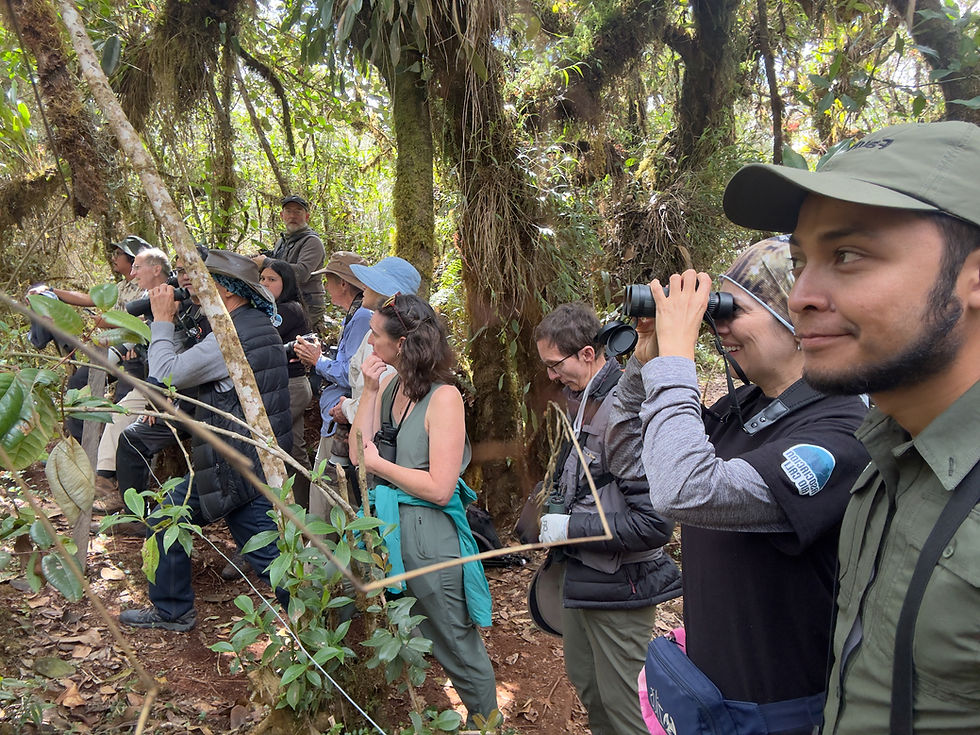
Knowledge rooted in place
Local bird guides and community members hold knowledge that cannot be replaced by field guides, eBird databases, or remote sensing tools.
This includes long-term observations of species presence and absence that predate systematic scientific monitoring, understanding of seasonal movements shaped by local climate patterns, awareness of subtle habitat changes that indicate ecosystem stress, and oral histories that connect landscape use to biodiversity over generations.
Community-based birdwatching values this knowledge as expertise, not anecdote. It treats local observation as a form of ecological intelligence that complements — and sometimes corrects — scientific frameworks.
When this knowledge is recognized and compensated appropriately, it strengthens both conservation outcomes and visitor experiences. A guide who knows a forest intimately over decades offers something no itinerary can manufacture.
Moving beyond extraction
Poorly designed tourism extracts value from territories without reinvesting in them. It uses landscapes, species, and local presence as inputs for visitor experiences — then moves on.
Responsible community-based birdwatching avoids this pattern through:
• Fair and transparent compensation structures
• Maintained small group sizes that reduce ecological pressure
• Deliberate avoidance of overuse at sensitive sites
• Support for community-led monitoring and adaptive management
The goal is not volume. It is continuity. Long-term relationships allow communities to plan, invest, and protect their landscapes over time — rather than optimizing for short-term visitor throughput.
The challenges of doing it right
Community-based approaches are not simple to implement, and operators who suggest otherwise should be treated with skepticism.
Common challenges include:
• Governance complexity: defining who speaks for a community, and how decisions are made collectively
• Uneven benefit distribution: ensuring economic value reaches households equitably, not just community leaders
• Capacity-building needs: developing guide skills, logistics capacity, and business management over time
• Limits to scalability: the most authentic community-based experiences cannot simply be replicated at higher volumes
Addressing these challenges requires patience, transparency, realistic expectations, and a willingness to work at the pace of community processes — which rarely align with tourism market timelines.
True community-based birdwatching prioritizes quality over scale, and long-term relationships over efficient transactions.
Birdwatching as part of a broader system
It is important to be clear: birdwatching alone does not conserve ecosystems. No tourism model does.
Its strength lies in being part of a broader conservation system that includes protected areas, scientific research, environmental education, and public policy. Community-based birdwatching contributes by aligning local livelihoods with conservation goals — but it works best when integrated into wider efforts, not positioned as a standalone solution.
Operators who make expansive conservation claims on the basis of birdwatching programs alone are overstating their impact. The most credible partners are those who understand their role within a larger system.
How we approach community-based birdwatching at Faunaris
At Faunaris, community engagement is not a marketing angle or a certification requirement. It is a structural decision embedded in how we select sites, design itineraries, and build long-term relationships in Colombia’s most biodiverse regions.
Our approach is built on:
• Long-term partnerships rather than one-off collaborations that extract value without continuity
• Respect for local governance structures and community-defined terms of engagement
• Shared responsibility for conservation outcomes — not outsourced to communities as a product feature
• Realistic limits to growth and visit frequency that protect both ecosystems and community capacity
We work with communities where birdwatching strengthens existing stewardship practices, rather than imposing external conservation models onto local contexts.
Beyond tourism, toward shared responsibility
Community-based birdwatching is not about creating perfect experiences. It is about building durable relationships between people, landscapes, and biodiversity — relationships that outlast any single visit or contract.
For organizations and partners seeking conservation-driven collaboration in Colombia, this approach offers something more substantive than a tourism product: a framework for shared stewardship, aligned incentives, and measurable impact over time.
If your organization is interested in conservation partnerships, supplier diversification with a biodiversity focus, or corporate nature engagement programs in Colombia, we would welcome the conversation.

Comments