
The 10-Minute Rule: Why the 'Perfect Wildlife Photo' is Captured with Knowledge, Not Luck
- Camilo Camargo P.
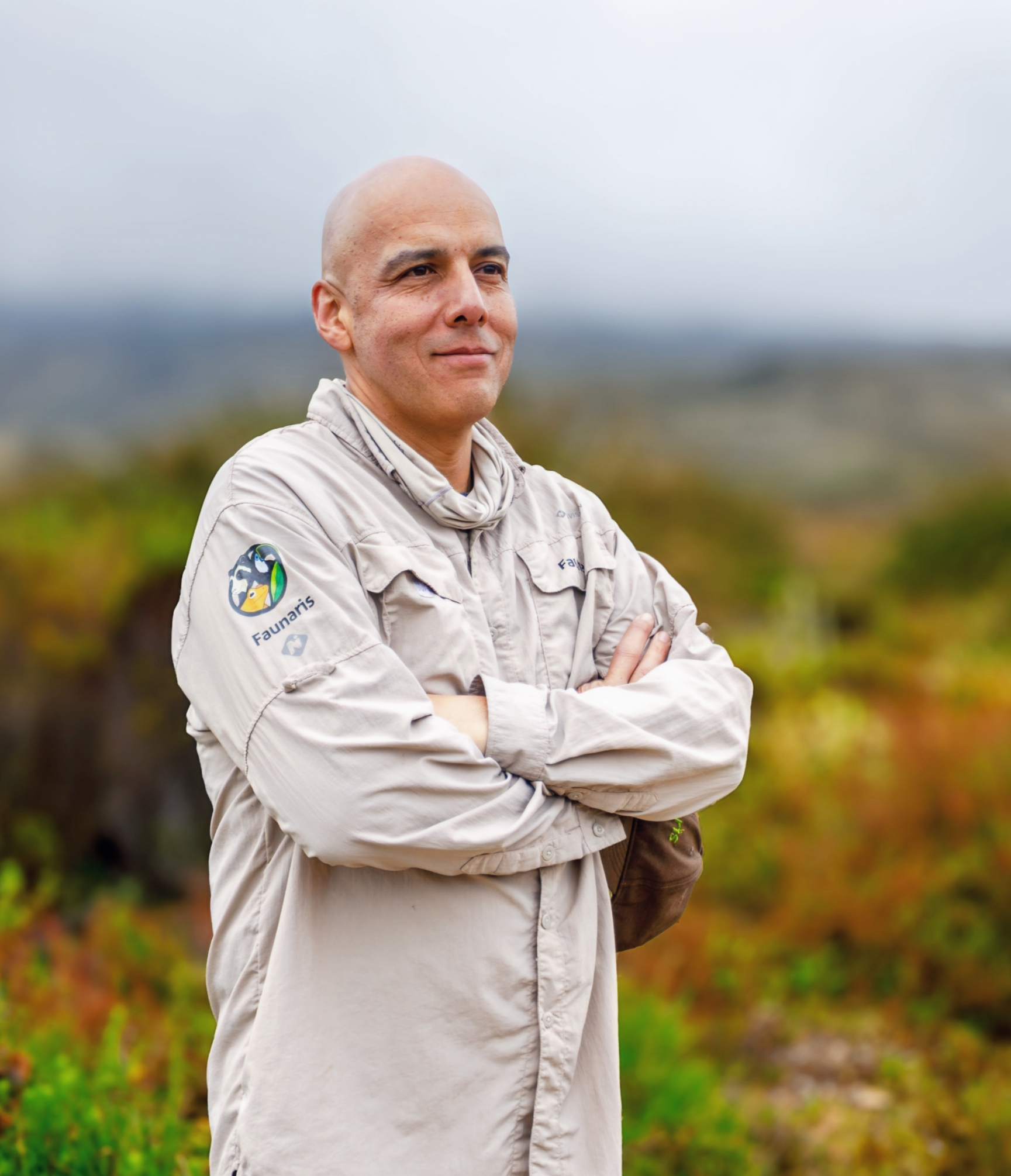
- Dec 16
- 3 min read
“Did you know that most nature photographers miss 90% of their opportunities because they don't know what they aren't seeing?”
The myth of "luck" is the favorite excuse of photographers who return home with incomplete images. The truth is that an impactful wildlife photo is rarely the product of chance. It is the culmination of fieldwork guided by science.
At Faunaris, we contrast the average photographer with the photographer guided by a biologist. Our thesis is clear: Patience is not just waiting; it is Educated Hope. That is, knowing with certainty where, when, and why an animal will behave in a certain way.
1. The Anatomy of Conscious Waiting (The Faunaris Concept)
Behind every Faunaris outing is an ethological investigation. Before stepping onto the trail, we study the target species: their behavior patterns, feeding habits, reproductive season, and other key aspects. We also validate whether the ecological conditions are optimal to increase the probability of sighting.
Key Biological Point: If our goal is to photograph the majestic Green-bearded Helmetcrest (Oxypogon guerinii), we don't just go to the páramo; we validate the flowering state of the frailejones and other plants they feed on in the most likely spots such as Sumapaz, Chingaza, or Páramo de Guerrero. If the flower isn't ready, the species won't be there.
The Faunaris Differentiator: Our guidance gives you the behavior map, not just the trail map.
2. The Immersive Photography Triangle (Proven Tactic)
At Faunaris, Biology and Photography work together, creating an ethical and productive framework:
Vertex 1: Light and Behavior (The When): Golden hour (the photographer's favorite) coincides with the peaks of biological activity: morning foraging or evening return to the refuge. A biologist doesn't just look for the light, they look for the reason for the movement.
Vertex 2: Distance and Ethics (The How): Knowing the animal's flight distance (the point at which it feels threatened) allows the photographer to approach without causing stress. This is non-negotiable and reinforces Faunaris' brand ethics.
Vertex 3: Background and Context (The Why): A biologist prioritizes photographing the animal in its key ecosystem (e.g., a hummingbird on a native flower or a frailejón), which automatically elevates the documentary and narrative value of the image.
3. Three Mistakes Photographers Make Without Consulting a Biologist
Location Error: Confusing a perch point with a feeding point. Result: Prolonged waiting in the wrong location, lost time, and frustration.
Sensory Error: Using camouflage without understanding the animal's predominant sense (e.g., a bird detects you by subtle movement, not the color of your clothing).
Timing Error: Going on a photo hunt during the middle of the day (11 a.m. - 2 p.m.) believing there is "better light," forgetting that fauna is inactive due to thermoregulation.
4. Conclusion and Call to Action (CTA)
The best camera is backed by deep knowledge. Specialized guiding is not a luxury; it is an investment that multiplies the quality and ethics of your portfolio.
“Stop ‘hunting’ for photos and start ‘understanding’ the moment.”
Live the experience that transforms your wildlife photography into documentary art. Our Bio Breaks are designed by expert biologists and photographers, such as our Scientific Director, Nicolás Rozo, and our General Manager and photographer, Camilo Camargo.
➡️ Click here to book your next páramo expedition in search of the Bearded Helmetcrest (Oxypogon guerinii) and experience Educated Hope.
Faunaris: We unite Biology and Photography to give you the graphic memory of wildlife.

Comments