
Learning to Observe: What the Field Has Taught Me About Nature (and About Us)

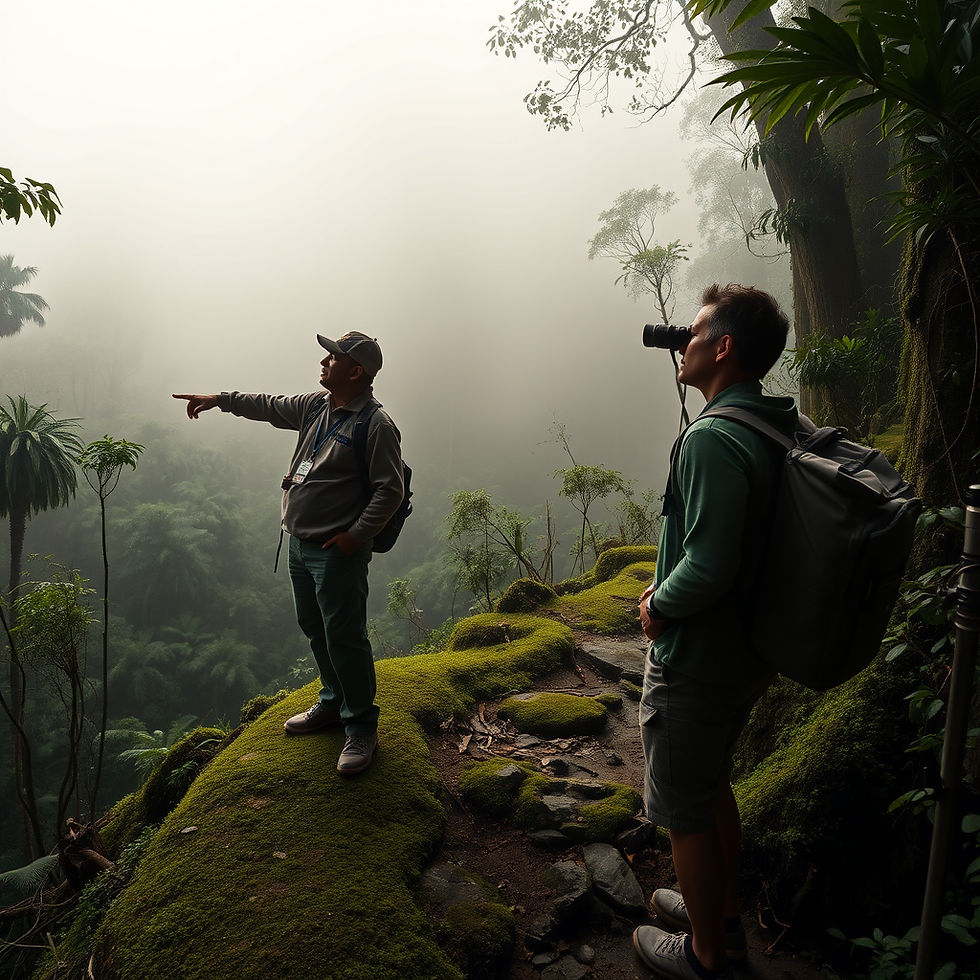
There is something that repeats itself in almost every field outing. It doesn’t matter if we are in a páramo, an Andean forest, or a wetland: at the beginning, most people look, but they are not yet observing.
Eyes move quickly across the landscape, searching for something extraordinary. A striking color, something rare, an unlikely scene. And when it doesn’t appear right away, an uncomfortable silence follows, along with the question: So… what do we do now? Over time, I came to understand that nature does not reveal its secrets to those who rush, but to those who learn to slow down and observe.
After many days in the field, I began to notice that this kind of magic happens in small moments. When someone stops asking “What species is that?” and starts saying “Did you notice how it moved?” or “Why do you think it’s feeding on that?” When the group falls silent without anyone asking for it. When a long wait stops feeling like wasted time.
The field has its own rhythm. Birds do not appear when we want them to, ecosystems do not explain themselves in straight lines, and nature never reveals itself in a single glance. It requires patience, attention, and presence.
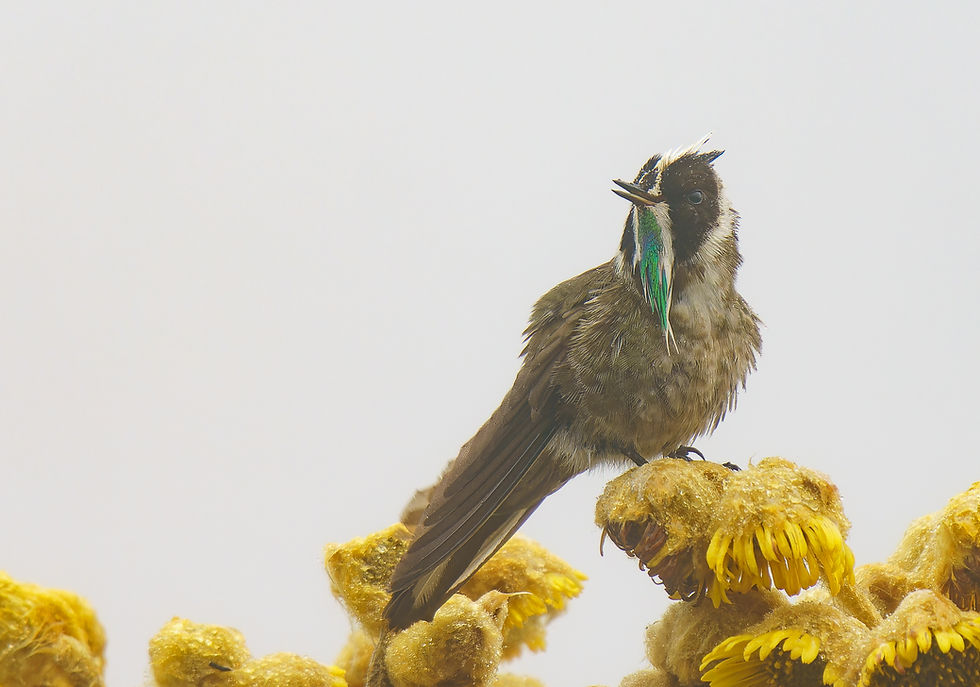
From a biological perspective, we know that ecosystems function as complex networks.Nothing exists in isolation: climate, vegetation, insects, birds, and soil are all connected through relationships that are invisible, but constant. When you learn to observe, you begin to read those signals. A change in a bird’s song can indicate the presence of a predator. The flowering of certain plants explains the abundance of hummingbirds. Persistent fog in the forest is not an obstacle, but a condition that defines life there. Science does not take away the magic; on the contrary, it amplifies it.Understanding how an ecosystem works gives meaning to every detail.
Observing nature with attention also says a lot about us.It confronts us with our impatience, our need for immediate results, and our habit of wanting to control everything. But when we slow down, something shifts. The experience stops being a list of species or a perfect photograph and becomes a different way of being present. Connecting with nature is not about accumulating data or images; it is about learning how to relate again to the living world we are part of.
In that sense, and in relation to our work, I believe that the best experiences in nature are not always the most spectacular ones, but the most conscious. Those that teach us to look more carefully, listen more deeply, and understand with respect. Going into the field is an invitation to something simple and profound: learning to observe in order to feel part of something larger again — part of the natural cycle to which we all belong.

Comments